

August 19, 2026 • Katharine Liberatore
What Is Pain - And Why Do We Feel It?
Pain is often misunderstood as a direct measure of damage. Learn how pain acts as your body's protection system and why understanding it can be crucial for recovery.
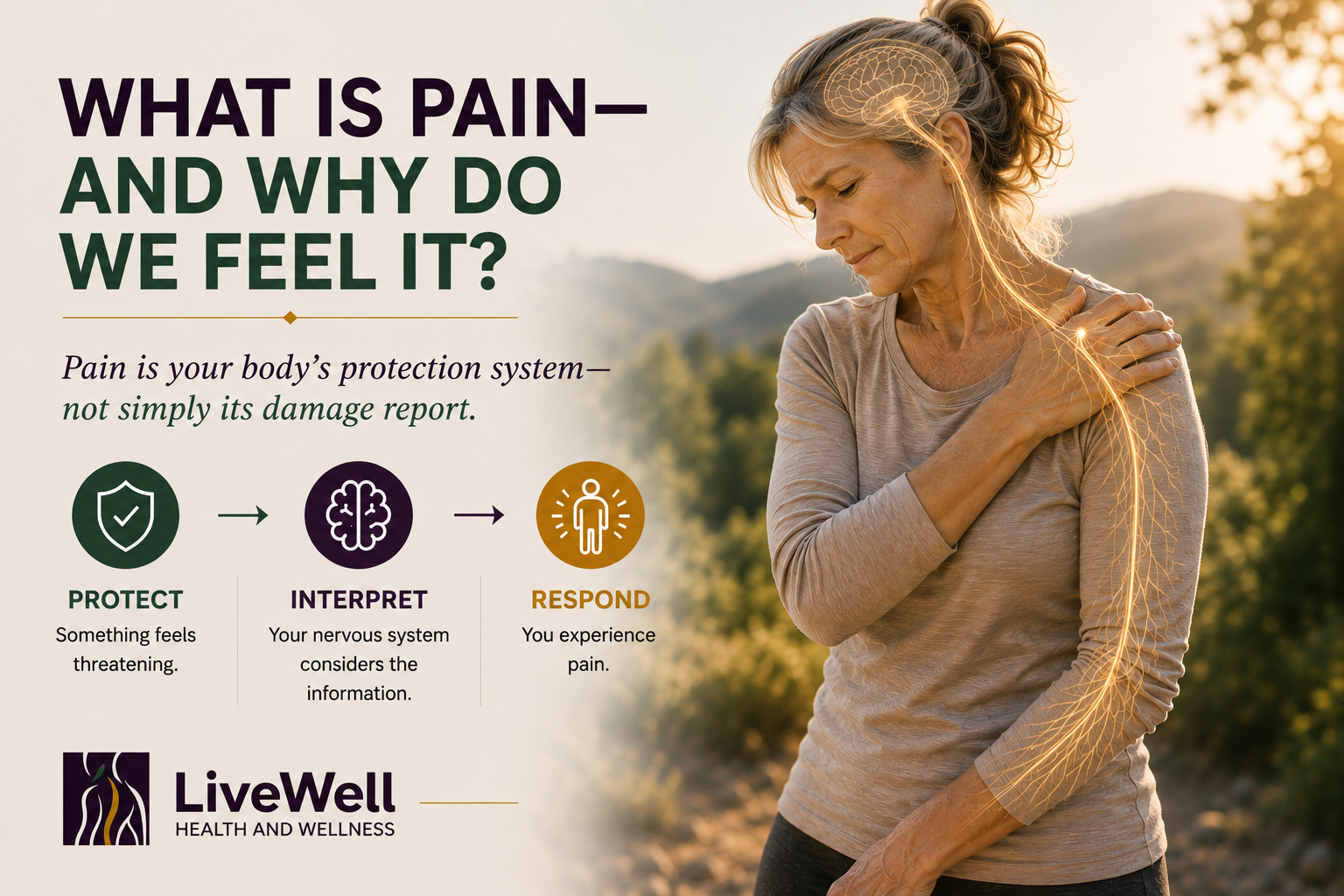
What Is Pain — and Why Do We Feel It?
Pain is something almost everyone experiences, but it is surprisingly misunderstood.
We often think of pain as a direct measure of damage:
More pain = more damage.
But that isn't quite how pain works.
Pain is better understood as part of your body's protection system. It is real, important and sometimes incredibly unpleasant—but the amount of pain you feel doesn't always tell us exactly how much tissue damage is present.
━━━━━━━━━━━━━━━━━━━━━━━━━━━━
Pain Is Your Body's Alarm System
Think of pain like a home alarm.
If someone breaks through your front door, the alarm goes off.
That's exactly what you want it to do.
In the same way, if you sprain your ankle, burn your hand or injure your back, your nervous system detects information that could represent a threat. Your brain processes that information along with many other factors and may produce pain as part of a protective response.
The pain is real. The alarm is doing its job.
But here's where things get interesting.
━━━━━━━━━━━━━━━━━━━━━━━━━━━━
The Alarm Can Become More Sensitive
Imagine that after the break-in, you become understandably concerned about protecting your house.
So you turn up the sensitivity of your alarm.
A few weeks later, a cat walks across the porch.
The alarm goes off again.
Importantly, it isn't a quieter or less real alarm just because this time there wasn't a burglar.
The alarm sounds just as loudly.
Your nervous system can sometimes behave in a similar way.
After injury or persistent pain, the body's protection system can become more sensitive. Things that previously didn't hurt—or movements that would normally be safe—may begin triggering pain more easily.
The pain is still completely real.
But the relationship between pain and tissue damage may have changed.
━━━━━━━━━━━━━━━━━━━━━━━━━━━━
Pain Does Not Always Equal Damage
This distinction is incredibly important.
You can have significant tissue damage with surprisingly little pain.
And you can experience severe pain without significant ongoing tissue damage.
That doesn't mean the pain is imagined or "all in your head."
It means pain is influenced by much more than the condition of your tissues alone.
Your nervous system considers information coming from your body alongside things such as previous experiences, context, stress, sleep, expectations and whether your brain interprets the situation as potentially threatening.
Pain is therefore not simply a damage report.
It's a protective experience.
━━━━━━━━━━━━━━━━━━━━━━━━━━━━
Why Does This Matter for Recovery?
Because believing that pain always means damage can change how you behave.
If bending hurts, you may understandably stop bending.
If exercise hurts, you may become afraid to exercise.
If turning your neck hurts, you may begin protecting it.
In the short term, protection can be useful. But over time, excessive avoidance can sometimes reinforce the nervous system's belief that a movement is dangerous.
That's why recovery isn't always about simply waiting until you feel absolutely no pain before moving again.
When appropriate, gradually returning to movement and activity can help your body relearn:
This is safe. I can do this.
━━━━━━━━━━━━━━━━━━━━━━━━━━━━
Understanding Pain Can Be Part of Treatment
One of the most valuable things we can do is help people understand why they hurt.
Understanding pain doesn't magically make it disappear.
But it can change what pain means.
Instead of automatically interpreting every painful movement as evidence that something is being damaged, you can begin to understand that sometimes your body's alarm system is simply being protective.
That can make it easier to gradually move, exercise and rebuild confidence.
━━━━━━━━━━━━━━━━━━━━━━━━━━━━
The Bottom Line
Pain is real.
Pain is protective.
And pain does not always equal damage.
Sometimes the alarm is responding appropriately to an injury.
Sometimes the alarm has become more sensitive.
Understanding the difference can be an important part of helping people feel safer moving again.
Pain is your body's protection system—not simply its damage report.
━━━━━━━━━━━━━━━━━━━━━━━━━━━━
How We Can Help
At LiveWell Health and Wellness, we look at more than simply where something hurts.
Osteopathic care combines hands-on osteopathic manual therapy, education and an individualized movement and exercise plan designed around your symptoms and goals.
Part of that process is helping people understand their pain so they can trust their bodies and move with confidence again.
Book an assessment to learn more.
━━━━━━━━━━━━━━━━━━━━━━━━━━━━
Disclaimer
This article is intended for general educational purposes and does not replace individualized medical advice. New, severe, unexplained or worsening pain should be assessed by an appropriate healthcare professional.
Book a visit
Book with Katharine Liberatore
Continue the conversation in clinic. Same-week appointments are usually available.
Book with Katharine