

June 15, 2026 • Katharine Liberatore
Can Stress Cause Back Pain?
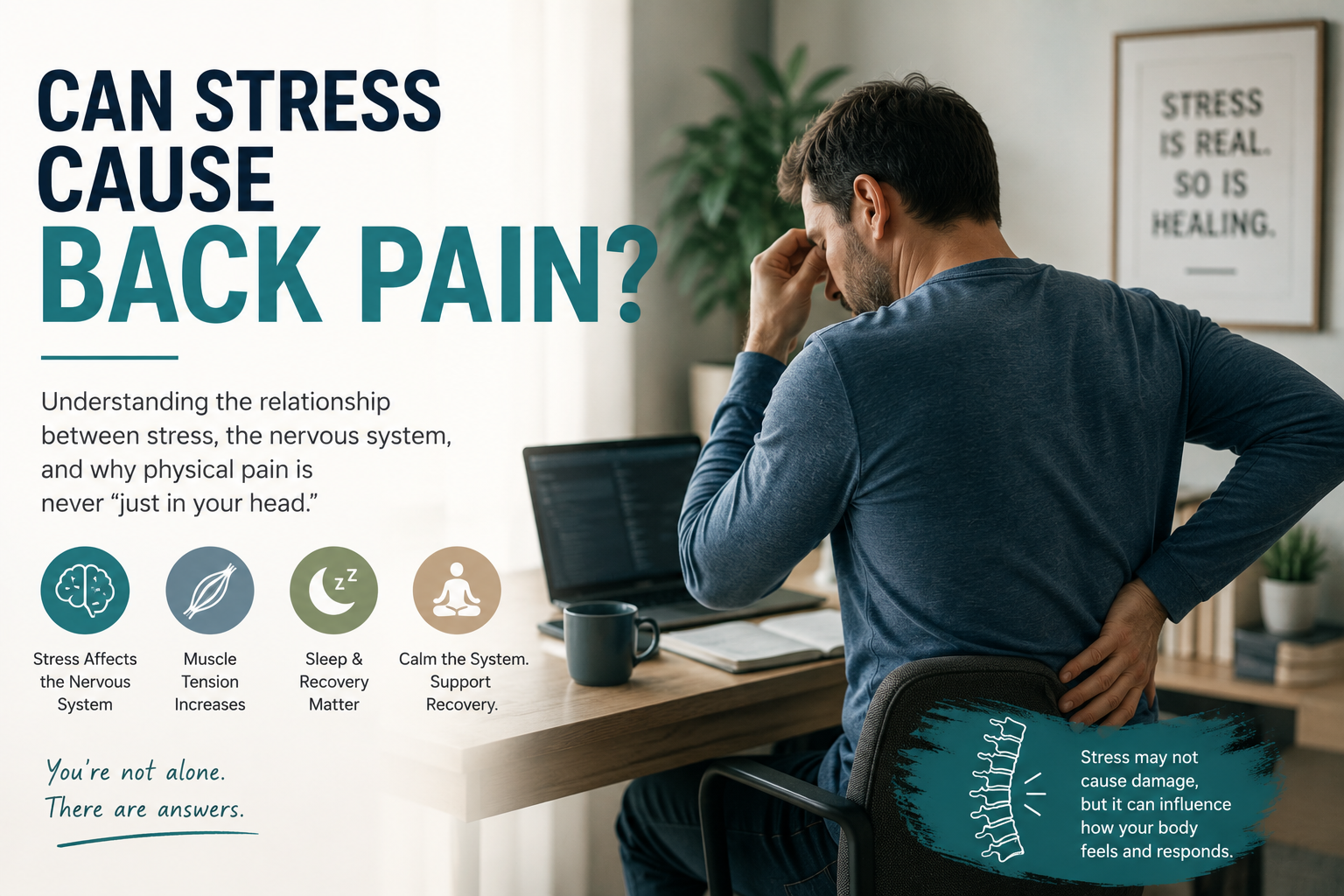
Stress can influence back pain by increasing muscle tension, altering sleep, and heightening sensitivity. Understanding this link is key to managing your symptoms and recovery.
Can Stress Cause Back Pain?
Understanding the relationship between stress, the nervous system, and why physical pain is rarely “just in your head.”
This is a topic that can feel frustrating to talk about.
Many people have had the experience of being told that stress is contributing to their pain and hearing that as:
“So you're saying it's all in my head?”
That’s not what I mean.
Stress and back pain have a relationship, but not in the way people often assume.
At our osteopathy clinic in downtown Toronto, this is a conversation we have regularly with people dealing with ongoing, recurrent, or difficult-to-explain back pain.
Many are surprised to learn that stress can influence physical symptoms without meaning the pain is imagined.
Can Stress Actually Cause Physical Pain?
The short answer is yes—stress can contribute to physical pain.
But usually not because stress creates damage.
Stress affects the body.
When we experience stress, the nervous system shifts into a more alert and protective state.
That response is incredibly helpful in short bursts.
Your heart rate changes.
Breathing changes.
Muscles become more prepared for action.
Attention narrows.
This system is designed to protect us.
The problem is that modern stress often doesn't look like escaping danger.
It looks like:
Long workdays Lack of recovery Financial pressure Family responsibilities Poor sleep Constant stimulation Feeling overwhelmed
The body doesn’t always distinguish between physical and emotional stress particularly well.
Why Does Stress Sometimes Show Up in the Back?
This is where people often get confused.
Stress doesn’t usually injure the back.
But it may influence how the body responds.
When stress levels increase, people often notice:
More muscular tension More guarding Less movement Poorer sleep Increased attention to symptoms Greater overall sensitivity
That doesn’t mean stress is the entire cause.
It means it may become one contributor.
Back pain is rarely one thing.
More often it’s a combination of physical, mechanical, lifestyle, recovery, and nervous system factors.
Why Does My Back Feel Tighter When I'm Stressed?
Many people notice this.
A stressful week.
Busy work period.
Family conflict.
Poor sleep.
Then suddenly the back feels tighter.
You're not imagining that.
Stress often changes breathing patterns, muscle activity, recovery, and overall nervous system sensitivity.
Some people clench their jaw.
Others feel tension in their shoulders.
Some notice headaches.
Others notice it in their back.
Different people carry stress differently.
Does This Mean My Pain Is Psychological?
No.
This is an important distinction.
Pain is always real.
Stress influencing pain does not make symptoms less legitimate.
If someone blushes when embarrassed, we don't say the redness is imaginary.
If someone’s heart rate increases during anxiety, we don't say it’s fake.
The nervous system changes physical responses all the time.
Pain is no different.
Stress is one factor that may influence how strongly pain is experienced.
What About Sleep?
Sleep deserves its own section because it has such a big influence.
Many people notice their back feels worse after poor sleep.
Again, this doesn’t necessarily mean more damage occurred.
Poor sleep may affect:
Recovery Pain sensitivity Energy levels Stress regulation Movement tolerance
This is one reason people often feel more resilient during periods of consistent sleep.
Why Doesn't Everyone Get Pain During Stress?
Great question.
Because stress is only one variable.
Previous injury history.
Activity levels.
General health.
Recovery.
Sleep.
Life circumstances.
Beliefs about pain.
All of these may influence how symptoms show up.
Two people can experience the same stressful event and have completely different physical responses.
What Can Help?
Before we talk about strategies, it's important to remember that pain is individual and there is rarely one single solution.
General approaches may include:
Improve Recovery
Sleep, downtime, and recovery matter more than many people realize.
Keep Moving
Movement often helps calm an overprotective system.
This doesn’t mean pushing through severe pain.
It means maintaining confidence in movement where possible.
Reduce the Pressure to “Fix” Everything
Trying to constantly monitor or control symptoms sometimes creates more tension rather than less.
Build Capacity
Exercise, strength, walking, hobbies, and enjoyable activities often improve resilience.
Learn About Pain
Understanding pain can reduce fear and make symptoms feel less unpredictable.
In many cases, education itself becomes part of treatment.
How We Can Help
At LiveWell Health and Wellness, we take a whole-person approach to back pain.
Rather than focusing only on structure, we consider movement, recovery, lifestyle factors, stress, sleep, and the broader context surrounding symptoms.
Treatment may include osteopathic manual therapy, education, movement recommendations, and strategies designed to help people better understand and manage their symptoms.
Our goal isn’t to tell people their pain is stress.
Our goal is to understand the many factors that may be contributing to symptoms and help people move forward with more clarity and confidence.
The Bottom Line
Can stress cause back pain?
Sometimes.
But usually the better question is:
Can stress influence back pain?
Very often—yes.
Stress doesn't make pain imaginary.
It doesn't mean damage isn't real.
But it may influence how sensitive, tense, protective, or uncomfortable the body feels.
Understanding that relationship can often help people feel less confused and more empowered in their recovery.
Book a visit
Book with Katharine Liberatore
Continue the conversation in clinic. Same-week appointments are usually available.
Book with Katharine