

July 29, 2026 • Katharine Liberatore
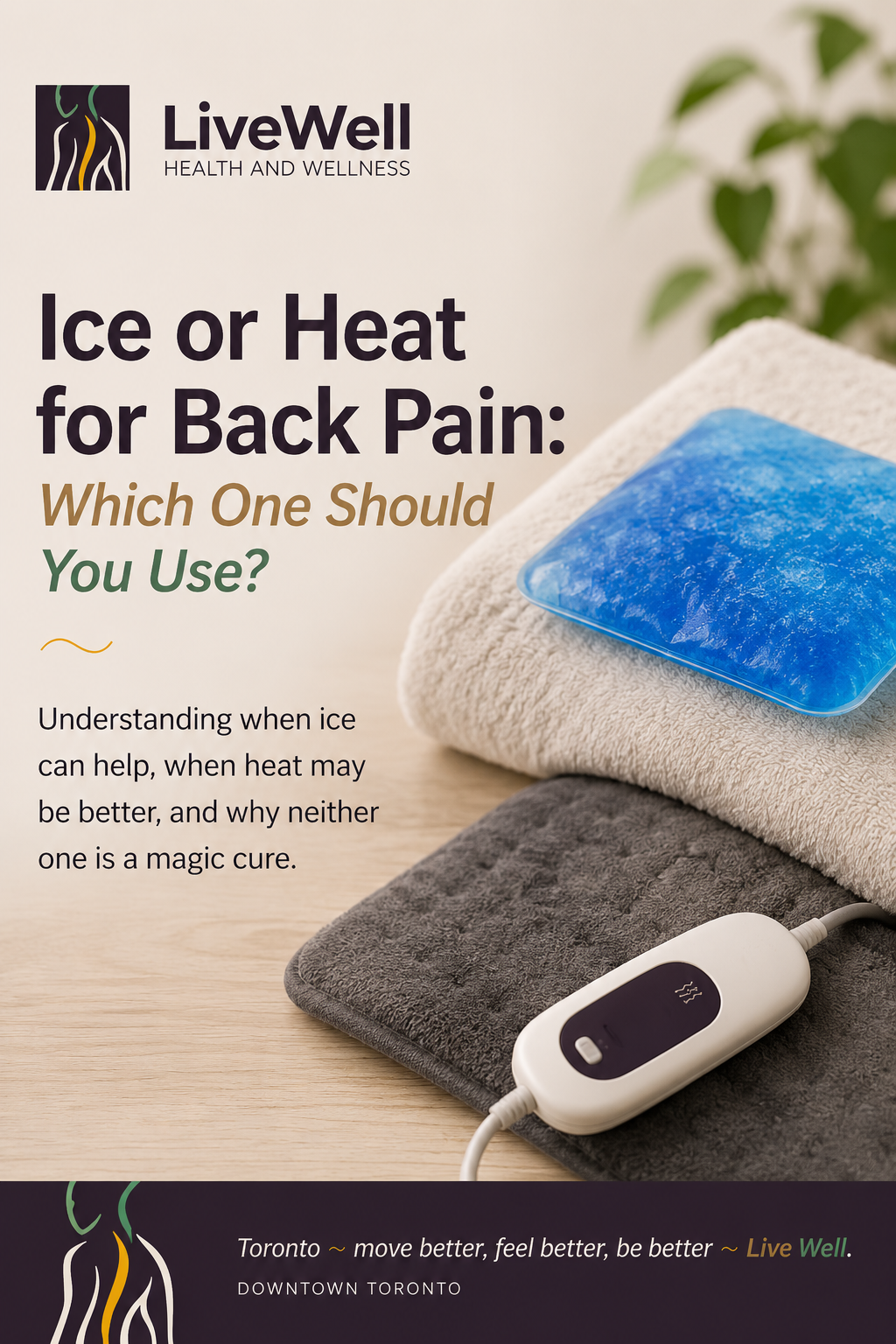
Ice or Heat for Back Pain: Which One Should You Use?
Discover whether ice or heat is best for your back pain. This guide explains the benefits of each, helping you choose the right method for relief.
Understanding when ice can help, when heat may be better, and why neither one is a magic cure.
If you've ever hurt your back, you've probably asked yourself:
"Should I use ice or heat?"
Ask ten people and you'll probably get ten different answers.
Some swear by an ice pack.
Others won't go anywhere without their heating pad.
So who's right?
At our osteopathy clinic in downtown Toronto, this is one of the most common questions we hear.
The good news is that both ice and heat can be helpful—they just work in different ways.
════════════════════════════════════
What Does Ice Do?
Ice can be helpful after a sudden back injury or painful flare-up, particularly if you find the cooling sensation reduces your pain.
It may:
• Temporarily reduce pain.
• Slightly limit swelling in some injuries.
• Make an acute flare-up feel more comfortable.
Many people assume that icing an injury speeds healing.
Current research suggests its biggest benefit is usually pain relief, rather than helping injured tissues heal faster.
One phrase I often use with patients is:
"Ice doesn't fix the injury—it helps you manage the injury."
If using ice helps you feel comfortable enough to get up, move around, or sleep better, it's doing exactly what you want it to do.
════════════════════════════════════
What Does Heat Do?
Heat tends to work best when your back feels:
• Tight.
• Stiff.
• Achy.
• "Locked up."
Warmth can help muscles relax and often feels soothing.
Many people notice they move more comfortably after using a heating pad, warm shower, or hot bath.
Like ice, heat mainly helps by making you feel better.
It doesn't repair injured tissues, but it may make movement easier—and movement is often one of the best things you can do for recovery.
════════════════════════════════════
Which One Is Better?
Here's the surprising answer:
Neither one is universally better.
Research suggests that both ice and heat can provide short-term pain relief for some people.
The difference is often personal preference.
Some people love ice.
Others hate it.
Some find heat incredibly relaxing.
Others prefer the numbing effect of cold.
If one feels better than the other, it's perfectly reasonable to use it.
════════════════════════════════════
Can You Use Both?
Absolutely.
Some people prefer ice immediately after a painful flare-up and switch to heat later as stiffness becomes the bigger problem.
Others alternate between the two.
There isn't strong evidence that one approach is superior for everyone.
The best choice is often the one that helps you feel comfortable enough to return to gentle movement.
════════════════════════════════════
How Long Should You Use Ice or Heat?
For most people:
• Apply ice or heat for about 15 to 20 minutes at a time.
• Place a towel between your skin and the ice pack or heating pad.
• Check your skin regularly to avoid irritation or burns.
• Repeat several times throughout the day if it continues to provide relief.
Neither treatment needs to be used continuously.
════════════════════════════════════
What About Inflammation?
People often assume all back pain is caused by inflammation.
In reality, that's not always the case.
Many episodes of back pain involve muscle tension, joint irritation, increased sensitivity of the nervous system, or a combination of factors.
Inflammation is also a normal and necessary part of healing. It's how your body begins repairing injured tissues.
While ice may slightly limit swelling in some injuries, there is little evidence that it speeds healing.
That's one reason why there isn't a single "correct" answer when choosing between ice and heat.
Treat the person—not just the diagnosis.
════════════════════════════════════
When Should You Seek Professional Advice?
If your pain is severe, continues to worsen, or isn't improving after a reasonable period of time, it's worth having it assessed.
Ice and heat can help manage symptoms, but they don't address every cause of back pain.
A healthcare professional can help determine what's contributing to your symptoms and develop a treatment plan that's appropriate for you.
════════════════════════════════════
How We Can Help
At LiveWell Health and Wellness, we believe the goal isn't simply to reduce pain.
It's to help you understand why you're hurting, regain confidence in movement, and return to the activities you enjoy.
Treatment may include osteopathic manual therapy, education, exercise recommendations, and practical strategies to help you recover as efficiently as possible.
════════════════════════════════════
The Bottom Line
Both ice and heat can be useful tools for managing back pain.
Neither one is a miracle treatment.
Neither one is the "right" answer for everyone.
If ice helps, use ice.
If heat feels better, use heat.
The most important goal is finding what helps you move comfortably again.
Remember:
Ice doesn't fix the injury—it helps you manage the injury.
And in most cases, movement—not the ice pack or heating pad—is what helps people recover over time.
════════════════════════════════════
Disclaimer
This article is intended for general educational purposes only and should not replace individualized medical advice.
If your symptoms are severe, worsening, or associated with significant weakness, numbness, changes in bowel or bladder function, fever, unexplained weight loss, or significant trauma, seek prompt medical attention. For persistent or recurring pain, consult a qualified healthcare professional for an individualized assessment.
Book a visit
Book with Katharine Liberatore
Continue the conversation in clinic. Same-week appointments are usually available.
Book with Katharine