

October 12, 2026 • Katharine Liberatore
What Should I Expect at My First Osteopathy Appointment?
Wondering what to expect at your first osteopathy appointment? We cover the assessment, hands-on treatment, and answer common questions like "Will it hurt?" and "Do I have to undress?".
What Happens at Your First Osteopathic Appointment?
Trying a new type of treatment can feel a little uncertain.
Will I have to undress? Is it going to hurt? Are you going to crack my neck? Will the whole first appointment just be assessment?
At LiveWell Health and Wellness, your first osteopathic appointment is designed to do three things: understand your problem, assess how your body is moving and, in most cases, begin treatment.
Here’s what you can expect.
First, We Talk
Your first appointment is 50 minutes, and we start with a conversation.
I want to understand what brought you in, when the problem started, what makes it better or worse, and how it is affecting your life.
We’ll also discuss relevant medical history, previous injuries, treatments you’ve tried and any imaging or investigations you’ve had.
But one of the most important questions is:
What do you want to be able to do?
Getting rid of pain may be part of the goal, but perhaps you also want to get back to running, lift your child comfortably, turn your head while driving or simply get through your workday without thinking about your back.
That helps guide both the assessment and the treatment.
Then We Assess How You Move
There isn't one standard assessment that everyone receives.
Your assessment is based on you and the reason you came in.
I may watch you walk and ask you to bend, rotate or perform movements related to your symptoms.
Depending on the problem, the assessment might also include range-of-motion testing, strength testing, orthopedic or neurological tests, and assessment in sitting or lying down.
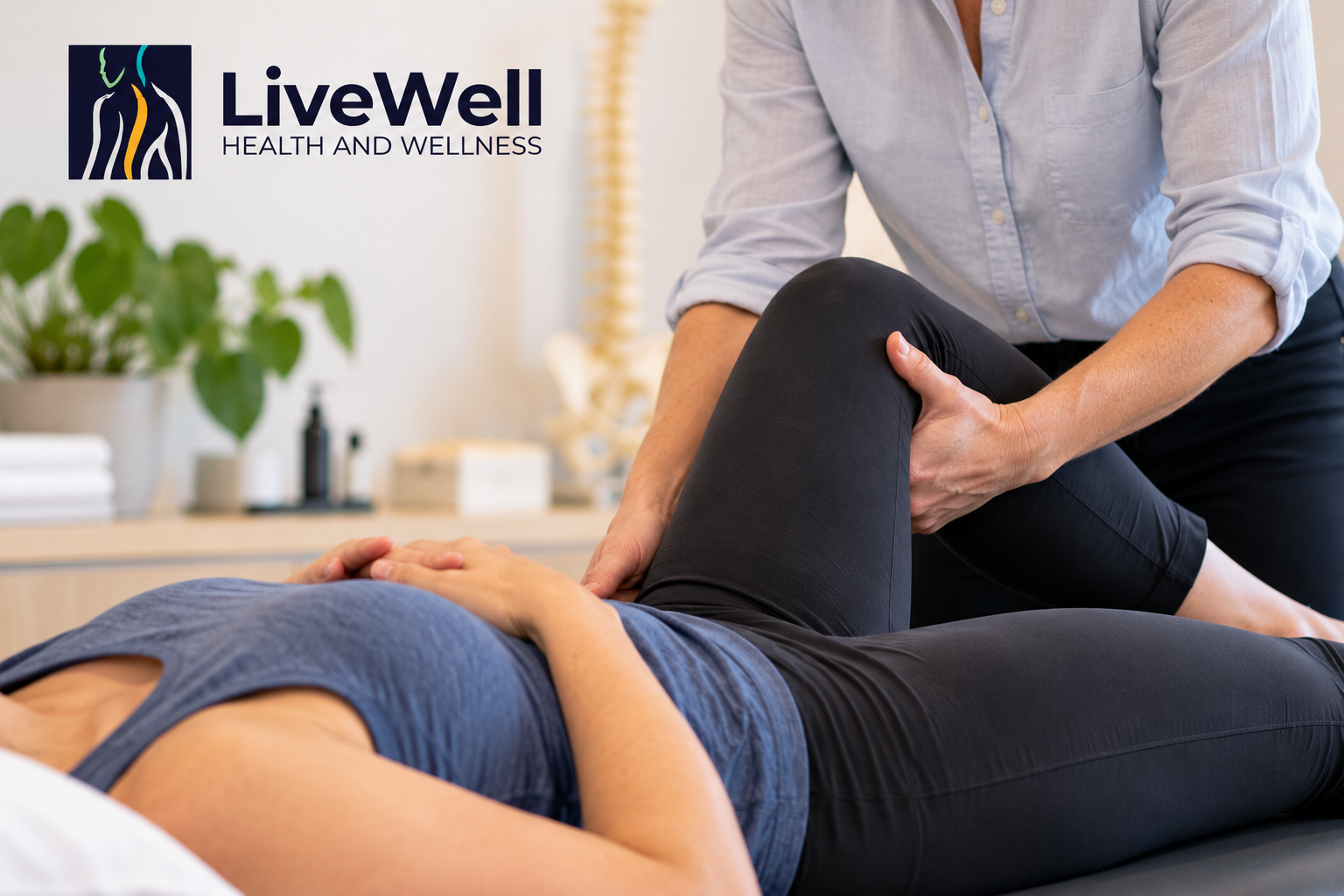
Hands-on assessment is also an important part of the process. I use palpation and movement testing to assess joints, muscles and other tissues that may be relevant to what you're experiencing.
We aren't looking for every little asymmetry or trying to find something that's “out of place.”
We're looking for information that helps us decide what may be relevant and what might be useful to treat.
Yes, You Usually Receive Treatment at Your First Appointment
Your first visit isn't normally 50 minutes of talking and testing.
Unless your history or assessment suggests that treatment isn't appropriate, we generally begin hands-on treatment during that first appointment.
How much treatment we have time for varies. A straightforward history and assessment may leave considerably more treatment time, while a complicated problem may require more investigation.
Most first appointments include at least some meaningful treatment time—often around 20 minutes or more—but the priority is doing an appropriate assessment rather than racing through it to get you onto the treatment table.
What Does the Treatment Feel Like?
Osteopathic manual treatment can include a variety of hands-on techniques involving muscles, joints and other tissues.
Most treatment doesn't hurt.
Some techniques can create temporary discomfort, and occasionally people describe that sensation as a “good hurt”—something intense or tender that somehow feels helpful rather than threatening.
But treatment should never feel like something you simply have to endure.
If something doesn't feel right, tell me. We can change it.
Treatment is something we do together, not something that happens to you regardless of how it feels.
Will You Crack My Back or Neck?
No.
I don't use high-velocity techniques to crack or manipulate your neck or back.
There are many other ways of working with joints, muscles and other tissues, and those are the techniques I use in my practice.
So if manipulation is something you've been nervous about, you don't need to worry about being unexpectedly “cracked” during your appointment.
We Reassess as We Go
Treatment isn't simply a collection of techniques performed for 30 or 40 minutes.
We want to know whether something is changing.
If turning your head was uncomfortable before treatment, we may check it again afterward.
If bending bothered your back, let's see what bending feels like now.
If your shoulder movement was restricted, has it changed?
We test, treat and retest.
Sometimes there is an obvious change during an appointment. Sometimes the change is more subtle. And sometimes something doesn't change at all.
All of that gives us information about what to do next.
Will I Get Exercises?
Maybe.
Exercise and movement are an important part of how I practise, but that doesn't mean everyone automatically leaves their first appointment with a list of exercises.
Sometimes there are one or two things that make sense to start immediately.
Other times, I want to see how you respond to treatment or spend a little more time thinking about what will be most useful before we introduce exercise at your next appointment.
Exercise should have a reason for being there—not simply be homework for the sake of homework.
Questions People Often Ask
Do I Have to Undress?
No. Absolutely not.
Most people remain clothed for treatment.
In some situations, having easier access to an area can make assessment or treatment easier, but only if you're comfortable with that.
Your comfort level determines what we do.
What Should I Wear?
Comfortable clothing that allows you to move is ideal.
Athletic clothing, leggings, shorts, sweatpants and comfortable tops all work well.
Try to avoid particularly restrictive clothing such as tight jeans because we may want to assess or move your hips, spine, shoulders or other joints.
Otherwise, you don't need special clothing for your appointment.
Will I Be Sore Afterwards?
Most people feel good after treatment, and ideally you should leave feeling the same or better than when you arrived.
Occasionally someone may experience temporary soreness or a short-lived reaction following treatment.
It isn't something we're trying to produce, and if it happens, it generally settles relatively quickly.
Being sore the next day isn't evidence that the treatment “worked.” Soreness isn't the goal.
How Many Treatments Will I Need?
This varies tremendously.
It depends on what you're coming in for, how long it has been going on, your overall health, your goals and—importantly—how you respond to treatment.
Some problems improve surprisingly quickly. Others take longer.
Rather than prescribing a long course of treatment before we know how you're going to respond, I generally start with a small number of visits—often two to four—and then reassess.
If you're improving, great. We decide what you need from there.
If you're not improving, that's important information too, and we need to reconsider the plan.
What Happens After the First Appointment?
Follow-up appointments are usually 50 minutes initially.
As things improve, you may not need that much time. When appropriate, we can move to shorter 25-minute appointments.
The goal isn't to keep you coming for 50-minute treatments indefinitely.
The goal is to respond to what you actually need as you improve.
The Bottom Line
Your first osteopathic appointment shouldn't feel mysterious.
We'll talk about what's happening, assess how you move, perform a hands-on examination and, in most cases, begin treatment during that first visit.
You don't have to undress.
You won't have your neck or back cracked.
Treatment generally shouldn't hurt.
And you won't automatically be prescribed a long series of appointments before we know how you respond.
Most importantly, you should understand what we're doing and why we're doing it.
That's an important part of osteopathic care at LiveWell.
How We Can Help
At LiveWell Health and Wellness, osteopathic care combines thorough assessment, hands-on osteopathic manual treatment, education and individualized movement and exercise.
Your first appointment is 50 minutes, giving us time to understand your problem, assess it properly and, in most cases, begin treatment.
Book an osteopathic assessment to get started.
Disclaimer
This article is intended for general educational purposes and does not replace individualized medical advice. New, severe, unexplained or worsening symptoms should be assessed by an appropriate healthcare professional.
Book a visit
Book with Katharine Liberatore
Continue the conversation in clinic. Same-week appointments are usually available.
Book with Katharine